Showing posts with label Event. Show all posts

Tantawawa: Tradition of All Saints


Peruvians, especially among the Andean towns, receive November with the celebrations of 
"All Saints" (November 1th) and "Day of the Dead" ( November 2nd). 
In those days one of the most traditional breads consumed is the “Tantawawa”,

TANTA = bread
WAWA= baby

which in the Andean tradition has a very important meaning at the moment of do offerings to dead people. According to historian Martin Romero, the offerings made to dead people with breads have its beginning in Egyptian culture, Mesopotamia and Spain. Later, it arrived to Peru between 1570 and 1650, period in which the Catholic religion enforces its religious doctrine on Andean and Inca culture.

Tantawawa is a type of sweet bread shaped and decorated in the form of a small child or infant.
The Tantawawa represents the origin; the being who is born and the tasting, symbolise the decline because for the Andean culture the death is the continuation of life, and a way to be related with dead people is through offerings.


Hundreds of people go to the markets to buy varieties of sweet breads to give as an offering to the deceased in the cemeteries.
These pieces of art are the reason for social celebration and festivities. As an example of that, this year in the region of Junin staff from the provincial municipality, prepared the largest TantaWawa in Peru, traditional Andean bread in the shape of a doll, prepared with wheat flour, maca and other ingredients native to the area, which was baptized with the name of "Shimona".


The huge bread, which measures 10 meters long by 2.50 wide was presented by Mayor Percy Chagua Huaranga in the main square of the city of Junín, department of the same name, gathering more than thousand of people in the event. 

After the presentation, the mayor of the province personally took charge of distributing the Tantawawa to the entire population and visitors who gathered at the Plaza de Armas in the city of Junín.

The organizers expressed that this custom is made in homage to the deceased who fought in the battle of Junín and also by the citizens who exercised different positions for the progress of the province of Junín.


Its cost varies between S/1.00 and S/4.00  depending on the size and the inputs of the loaves. You can also find this delicacies at Mistura this week  and in the principal streets around Lima, don't be afraid and give it a try!


By: GringoPeru


Turron Doña Pepa - Popular stories


A very well know dessert that has conquered the hearts of thousands with its original and unique taste. 

Turron Doña Pepa (Mrs. Pepa's nougat) is a traditional Peruvian sweet that is consumed mostly in October because of its close relationship with the celebration of the Lord of the Miracles, the world's largest procession, according to the Vatican. In Peru, especially Lima, October is the purple month and the month of turrones.  


The exact origin of this dessert is still unknown, but here we share the most popular stories: (you can also watch the video


1. The Miracle

The most popular or beloved story by all Peruvians, is Josefa Marmanillo, as well known as "Doña Pepa", a slave from the Cañete valley (colonial times) that stood out as a good cook. Due to some health problems, she began to feel a paralysis in the joints that prevented her from performing her daily tasks. Hearing the rumors of the miracles of the Christ of Pachacamilla, she decides to travel from her native Cañete to Lima. Her faith and devotion was so immense that she recovered from the evils that tormented her. As a token of her appreciation she traveled from Cañete to Lima just to accompany her divine patron. Nevertheless, she wanted to offer him a present as a token of her gratitude. Therefore, when she was in the procession she noticed everything that involves the festival as the group of sahumadoras (woman who carries a perfume in braziers or pebeteros during the religious processions and its task is to sahumar, that is to say "to give aromatic smoke to something in order to purify it or that it smells good") with purple habit as the group of singers. In addition, of the shippers of each team dressed in full suit and above this attire, the habit with insignia.  However, what most drew her attention was the suppliers that were located in the surroundings where the procession passed, they offered the classic anticuchos, picarones, choclos, choncholíes, rice with milk, purple mazamorra, emollient and picarones with its particular honey (all Peruvian desserts). In that moment, when she saw the food and the desserts, she decided to thank her Lord with a new Peruvian sweet prepared by her. Thus, to the next exit of the divine image she took her nougat and offered it to the parishioners as a sign of her gratitude to the Lord of Miracles. From there, the nougat of Josefa was spread and baptized as it is known in our time: "Turrón de Doña Pepa". 

2. The Contest

Another popular story talks about a contest arranged by a Viceroy looking for a tasty and nutritious sweet that could be preserved for several days without losing its flavor. Marmanillo was the winner of that event so, her nickname 'Doña Pepa' was associated with dessert. 


3. The cook

This one refers to "a brunette cook" married to a man named Cobos, former employee of the Public Beneficence. Her real name would have been Josefa and she was a specialist in preparing snacks. She also had the ability to make drinks and desserts. Josefa immortalized her name with an original nougat made of wheat flour, butter, egg and honey. 

There are several stories behind this delicious dessert, we choose the best known to share with you. No matter when or who was the original creator, the mystery of its origin only enhances the popularity of this traditional dessert.

Written by: GringoPeru

Yoga in Machu Picchu! - International Day of Yoga, 21 June


A large number of people gathered at the Archaeological Park of Machu Picchu to perform a series of yoga sessions as part of  International Day of Yoga celebrations last June 19th. 


The event was organised by the Embassy of India. The ambassador, Sandeep Chakravorty, came to the Inca sanctuary and express his gratefulness to the Minister of Culture, Salvador del Solar, for allowing them to practice yoga in Machu Picchu. 


"In Peru there is a lot of fascination and practice for Yoga. We are taking advantage of the union of two very beautiful things, Machu Picchu and Yoga," said the ambassador to newspaper El Comercio. 


International Day of Yoga is also called as the World Yoga Day. United Nations General Assembly has declared 21st of June as an International Yoga Day on 11th of December in 2014. The very first World Day was celebrated all around the world, with great enthusiasm in spite of hostile weather conditions in different parts of the world.


Pictures credit: Marca Peru / El Comercio
Translation/ Written by: GringoPeru 

History of Peruvian Flag Day


Every June 7th, the "Flag Day" is celebrated in honour of the Battle of Arica (1880), in which approximately 1,900 men defended the patriotic territory commanded by Colonel Francisco Bolognesi.

Every June 7, the country remembers the resistance of the Peruvian forces and the defence of the Morro de Arica, which occurred in 1880, as part of the War of the Pacific (1879-1883). Colonel Francisco Bolognesi and Alfonso Ugarte participated in the battle, but also more than 1,800 soldiers who fought against the Chilean army to defend the national territory. For this historic event is celebrated every year Flag Day.

The War had entered a new period. After the naval combats at Punta Angamos, Punta Gruesa and Iquique, the enemy advanced unopposed after the subsequent defeat in Alto de la Alianza and the flight of the Bolivian army.


The city of Tacna had been besieged by Chileans who had more than 5,000 men and were better equipped with weapons and supplies. Colonel Bolognesi had taken command of that place and, despite all the adversities, agreed with the officers' board to defend the Morro and to resist as much as possible.


The antagonist, Chilean general Baquedano then sent Major Jose de la Cruz Salvo to request Bolognesi surrender, aware that his forces and troops were immensely superior. After the meeting, in which the other 14 members of that staff defended the country, the colonel said the well-known and celebrated words:


 "I have sacred duties to fulfill and I will fulfill them until I burn the last cartridge."


Alfonso Ugarte, who was in command of the eighth Peruvian division, also remained in history after jumping down a cliff with the Peruvian flag to prevent it being taken by the enemies.


The battle had serious consequences for the country. There were 700 dead and more than 1,000 wounded, taken as prisoners.

Bolognesi Square

Based on this event, June 7 of every year was instituted as Flag Day to remember the effort and heroism of Peruvians, despite the adversity that had to face and which was part of the enemy and the own Government of the time.
In this day, the public, private institutions, schools and others choose to flutter the flag of the country, authorities also hold an official ceremony at Bolognesi Square.


by: GringoPeru

Let's celebrate the International Museum Day


Today we commemorate the International Museum Day and to celebrate it, the Ministry of Culture has scheduled more than 150 free activities nationwide for the entire month of May.

Painting competitions, night tours, exhibitions, screening of documentaries, plays, conversations, dances, among other activities will take place throughout the day in museums and cultural centers.

Take note of these must-sees places around Lima:


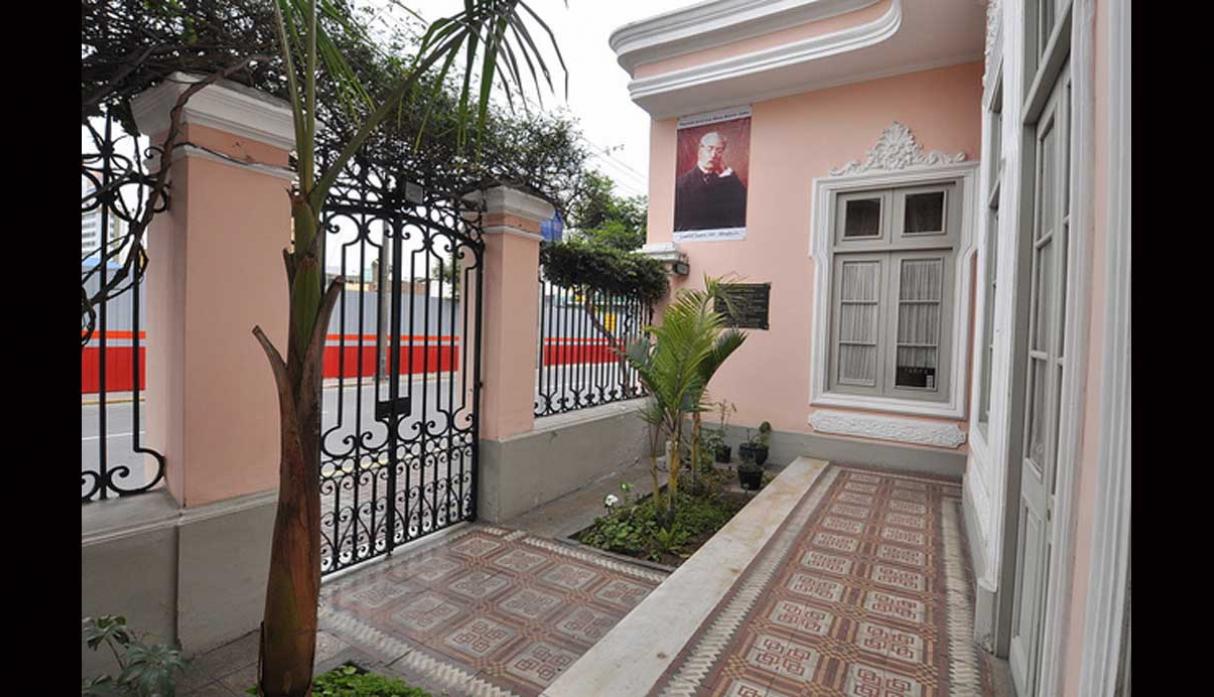
Casa Museo Marina Núñez del Prado
(Calle Antero Aspillaga 300, San Isidro)


Today (May 18) the workshop "Los Rincones de Marina" is held for children and guided tours are scheduled at night. From 4 p.m. to 9 p.m. Free entrance.

The regular tour starts at 6 p.m and is free . Contact number: 513-9000


Museo de Sitio Bodega y Quadra
(Jr. Áncash 213, Cercado de Lima)

Enjoy a free night tour in one of the must-see museums of the Historic Center of Lima. You'll delight the objects of daily use that date from the foundation of Lima until the republican time and ceramic pieces of the cultures Lima, Inca and Chancay. Tours start from 6 p.m


Museo de Arte de Lima 
(Av. Paseo Colón 125, Centro de Lima)

From May 18 to 21, attendees will be able to request for free the 'MALI Route', a self-guided map that will allow them to explore the permanent exhibition and learn details of the masterpieces of the museum's collection. From 10:30 a.m.

On Sunday, May 21, visitors with free guided tours, will see the permanent and temporary exhibitions Orozco, Rivera and Siqueiros,  Como en la pintura, and MALI in situ. Grandstand. by Ishmael Randall Weeks. This will be taking place between 10:30 a.m. and 6 p.m.


The Night of the Museums in Miraflores

The City Hall of Miraflores has scheduled a nocturnal visit to the most emblematic museums of the district, such as the Ricardo Palma House Museum, LUM - Place of Memory, Tolerance and Social Inclusion and the Huaca Pucllana. The cost per person for this tour is S / 3 and starts at 6 p.m in The City Hall of Miraflores on May 26.

To be part of the tour you must register at turismo@miraflores.gob.pe or call: 617-7259


Museo de la Nación
(Av. Javier Prado Este 2465, San Borja)

Inauguration of the sample of Andean Religiosity. There will also be educational, artistic and talk activities. From 9 a.m. to 5 p.m. Free entry.


Museo Pedro de Osma
(Av. Pedro de Osma 421, Barranco)

Don't miss the guided visit by  to the permanent viceregal exhibition in the four rooms of this museum. Schedule: 10:30 a.m. till 4:45 p.m. Free entry.

"El Director Guía" guided tour for the new "Arte del Sur Andino" room by Pedro Pablo Alayza (Museum Director) at 5 p.m. Limited space for the first 15 people to arrive.


MATE = Museo Mario Testino
(Av. Pedro de Osma 409, Barranco)

Introductory explanation about the Permanent Collection of the Museum.  Participation of visitors exchanging comments at the end of the tour. 
Projection of the photographs to the visitors. Activities start from 5 p.m. till 10 p.m.


Written by GringoPeru
Credits to: Newspaper El Comercio, Peru21 and Correo.

Túpac Amaru II the leader of the indigenous rebellion


On May 18th 1781, the leader of the indigenous uprising of 1780 José Gabriel Condorcanqui AKA Túpac Amaru II was put to death however, he may have physically passed on but his image lasted throughout the ages as a symbol for indigenous rights and the struggle for independence. José Gabriel Condorcanqui Noguera was born in Surimana, Cusco in 1738 he was the son of Miguel Condorcanqui Usquiconsa, of Inca ancestry and his mother Rosa Noguera Valenzuela of Spanish ancestry. In some historical debates Miguel Condorcanqui is said to have been related to Túpac Amaru (1545-1572) making Amaru José Gabriel Condorcanqui’s great-grandfather. Túpac Amaru is considered the last Sapa Inca and after serving as a puppet for the Spanish he fled to the jungle of the Upper Amazon and created a Neo-Inca State called Vilcabamba from there he launched his rebellion against the Spanish oppressors however, in 1572 the Inca Empire officially collapsed with the defeat and execution of Túpac Amaru. By 1700s the Spanish had already been ruling Peru for well over 200 years and cruel and unjust laws such as the encomienda system were taking their toll, this system meant that a handful of Spaniards were given land and indigenous people were used as slaves to work the land, treatment was often appalling and barbaric. However, things changed in the 1700s when the encomienda system was phased out under Blasco Núñez Vela, the first viceroy of Peru. The ending of the encomienda system did not mean things got better for the indigenous people, Spaniards who rejected the ending of the old system decided to enforce other ways of exploitation this came through economic slavery. Heavy taxes imposed on indigenous people meant that they were forced to work the fields in the same appalling conditions, some were worked to death in the mines or in the textile industry. Such heavy taxes meant that the indigenous people were still in a way enslaved while the oppressors gained off their misery. Not only did rich business men make money off cruel taxes but the Catholic Church which had been enforcing Catholicism on the indigenous people through scare tactics and if the idea of hell did not scare them into the belief system then through torture that would lead to death would. This meant that many indigenous people worked for the church and paid more to the church so it would look like they were good Christians and would not be condemned to hell. Now José was considered “mestizo” meaning those that come from Spanish and Indigenous parents and due to his mother he received a Jesuit education at the San Francisco de Borja School. He went on to study art at the University of San Marcos, he also learnt Quechua and Latin. José was given the title of Marquis of Oropesa however, the Betancourt Tupac Amaru clan disputed his claim to Marquis. The Marquis of Oropesa was important whoever claimed it was considered the symbolic head of the Inca nobility. This however, is difficult to explain fully as throughout the ages the Marquis of Oropesa was passed around even by those that did not come from “royal” Inca decent and other self-proclaimed the title of Marquis. He later gained caciqueship over Pampamarca, Tungasuca and Surimana (caciqueship comes from curaca, a curaca was a governor of a certain area in the Inca Empire) however, he had to answer to the Spanish authorities. 


Another important event happened in 1760 when he married Micaela Bastidas Puyucahua, who was of Afro-Indigenous decent and would play an important role later on. They had three children Hipólito (1761), Mariano (1762), and Fernando (1768). Regardless of José´s education and power over the regions mentioned before he identified with his indigenous roots and with his power he constantly attempted to change how indigenous people were treated but was constantly ridiculed and ignored. Ridicule after ridicule caused José to feel bitter and angry at the Spanish government. José also liked reading the Royal Commentaries of the Incas, and General History of Peru by Garcilaso de la Vega which was banned in the Vice-royalty of Peru, authorities feared it would lead to rebellion. 


The constant abuse and indignation of the indigenous people pushed José over the edge, his rebellion started when he refused to take orders such as tax and debt collection of the indigenous people under his control and the changing of his to Túpac Amaru II. This act of defiance was met with death threats made by the Spanish Governor Antonio de Arriaga. Antonio de Arriaga was abducted by Túpac and his followers after he left a party drunk, Túpac then enacted the second phase of his plan. He forced Arriaga to write letters to Spaniards and curacas alike within a few days 200 of the respondents arrived only to be surrounded by Túpac and 4000 indigenous rebels. Túpac released Arriaga’s slave Antonio Oblitas and allowed him to execute his master after several attempts Arriaga was hanged and the rest of the of those that showed up were also executed. After this he quickly assembled an army of about 2,000 to 6,000 indigenous who had abandoned their positions when they heard that rebellion had started in the region. With this new army Túpac headed to Cusco taking Quispicanchis, Tinta, Cotabambas, Calca, and Chumbivilcas raiding and killing the Spanish who lived there. Authorities in the City of Cusco sent an army to counteract the incoming force with a squadron of 1,300 soldiers, approximately half of these were loyal indigenous soldiers. On November 18, 1780 the Battle of Sangarará took place, in some accounts it is said that Túpac allowed Criollos (**), women, and children to leave for the surrounding hills. The battle was a huge success for Túpac and his rebels, killing the majority of Spaniards. (**, Criollos were a social class in the Viceroyalty of Peru, usually they were people born locally with confirmed linage to Europe.) Throughout it all Micaela Bastidas Puyucahua, wife of Túpac fought alongside him and she was also in charge organizing supplies and recruiting new soldiers. This battle however, indicated an issue that would bring down the rebellion from within, the issue was that some rebels refused to take orders and acted on their own accord committing acts of atrocities against the Spanish. This made the Criollos turn against the rebels and the idea of independence from Spain and started to support the Spanish in the defeat of the rebels. With the Criollos rallying against the rebel’s, defeat came quickly for Túpac, one main defeat was the attempt to take Cusco which failed because the city was reinforced by soldiers that came from Lima. Eventually pushed back to the surrounding villages, Túpac continued to fight until he was betrayed by two of his officer’s colonel Ventura Landaeta and captain Francisco Cruz. With the capture of Túpac authorities attempted to extract information about other rebels from him however, he replied defiantly “There are no accomplices here other than you and I. You as oppressor, I as liberator, deserve to die." On May 18, 1781 Túpac was condemned to death but before his own death authorities tied him up and he was forced to watch his wife being kicked to death after her execution by hanging failed, his oldest son Hipólito, his uncle Francisco Tupa Amaro, his brother-in-law Antonio Bastidas, and some of his captains were also killed in front of him. 


Túpac was then tortured and his tongue cut out, he was then tied to four horses who galloped in four opposite directions but failed to rip his limbs from his body, the Spanish then resorted to decapitation. Túpac was decapitated in the same location as his suspected great-grandfather Túpac Amaru. This was not the end of the revolt, indigenous people continued to revolt so the Spanish resorted in executing the last of Túpac’s family but spared the youngest son Fernando who was sentence to life prison. The body of Túpac was dismembered and the parts scattered in the areas loyal to him to serve as a warning, all property, land, goods of Túpac were also destroyed. Túpac Amaru II and his revolt made a huge social change as some indigenous groups especially in Upper Peru (now Bolivia) was inspired by his actions and became a large opposing force against the Spanish however, Peruvian Criollos continued to oppose independence as they feared what the indigenous people would do to them when freed and some Peruvian Criollos had businesses with the Spaniards. The failure of the rebellion also meant that after 1781 the Spanish enforced laws and regulations that would have an effect that would last till this day. Things such as indigenous clothing, customs, language, dance, songs, free expression, traditions and culture were banned outright with severe punishment such as death for those that broke the new laws. The new dress code meant that indigenous people were made to wear peasant clothing similar to those used by peasants of Europe in the 18th century, they had to speak only Spanish, considering yourself to be “Inca” was illegal and more and more people were forced into church as all other things outside Catholicism was considered pagan. These changes had an everlasting effect on Andean people with a large majority who feel ashamed of their history, culture and language even today. 

Some researchers suggest that the changes are so engrained into the population that it will be very hard to change and pride in such culture is only felt by certain classes and not by general population.


Written by: GringoPerú