Showing posts with label Museum. Show all posts

Let's celebrate the International Museum Day


Today we commemorate the International Museum Day and to celebrate it, the Ministry of Culture has scheduled more than 150 free activities nationwide for the entire month of May.

Painting competitions, night tours, exhibitions, screening of documentaries, plays, conversations, dances, among other activities will take place throughout the day in museums and cultural centers.

Take note of these must-sees places around Lima:


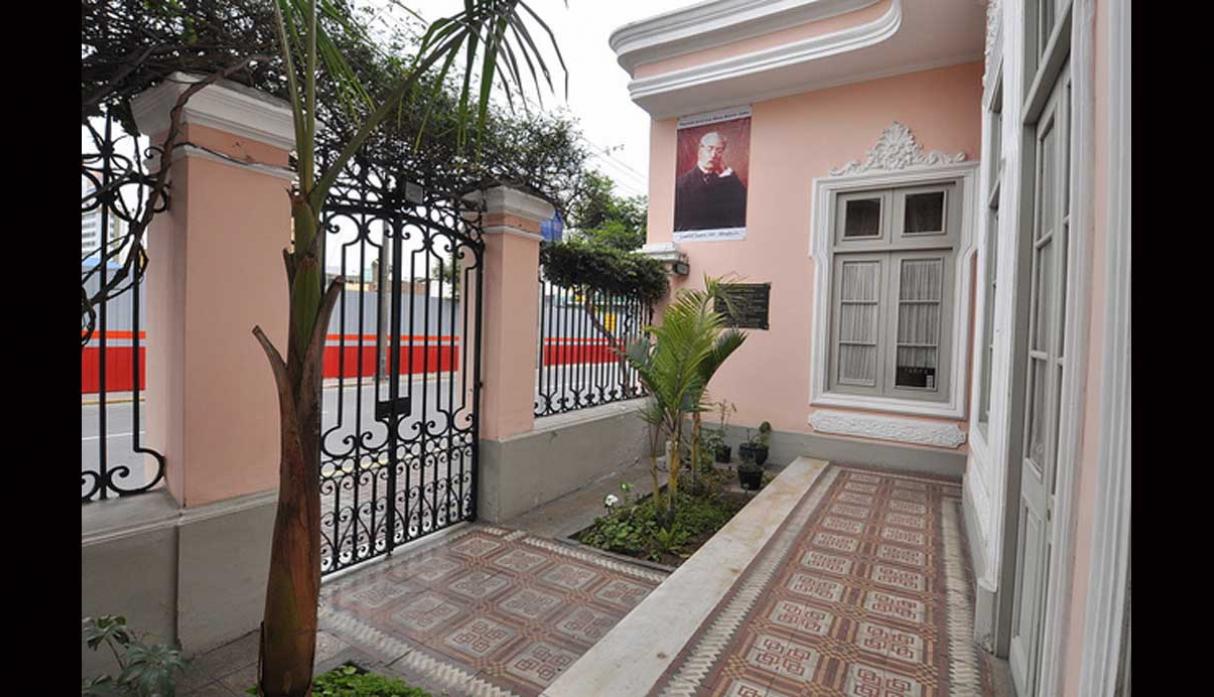
Casa Museo Marina Núñez del Prado
(Calle Antero Aspillaga 300, San Isidro)


Today (May 18) the workshop "Los Rincones de Marina" is held for children and guided tours are scheduled at night. From 4 p.m. to 9 p.m. Free entrance.

The regular tour starts at 6 p.m and is free . Contact number: 513-9000


Museo de Sitio Bodega y Quadra
(Jr. Áncash 213, Cercado de Lima)

Enjoy a free night tour in one of the must-see museums of the Historic Center of Lima. You'll delight the objects of daily use that date from the foundation of Lima until the republican time and ceramic pieces of the cultures Lima, Inca and Chancay. Tours start from 6 p.m


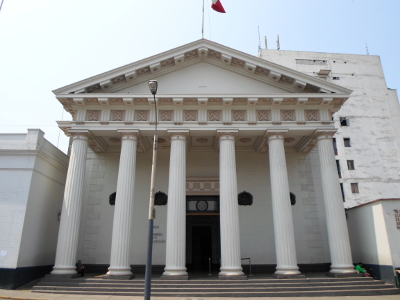
Museo de Arte de Lima 
(Av. Paseo Colón 125, Centro de Lima)

From May 18 to 21, attendees will be able to request for free the 'MALI Route', a self-guided map that will allow them to explore the permanent exhibition and learn details of the masterpieces of the museum's collection. From 10:30 a.m.

On Sunday, May 21, visitors with free guided tours, will see the permanent and temporary exhibitions Orozco, Rivera and Siqueiros,  Como en la pintura, and MALI in situ. Grandstand. by Ishmael Randall Weeks. This will be taking place between 10:30 a.m. and 6 p.m.


The Night of the Museums in Miraflores

The City Hall of Miraflores has scheduled a nocturnal visit to the most emblematic museums of the district, such as the Ricardo Palma House Museum, LUM - Place of Memory, Tolerance and Social Inclusion and the Huaca Pucllana. The cost per person for this tour is S / 3 and starts at 6 p.m in The City Hall of Miraflores on May 26.

To be part of the tour you must register at turismo@miraflores.gob.pe or call: 617-7259


Museo de la Nación
(Av. Javier Prado Este 2465, San Borja)

Inauguration of the sample of Andean Religiosity. There will also be educational, artistic and talk activities. From 9 a.m. to 5 p.m. Free entry.


Museo Pedro de Osma
(Av. Pedro de Osma 421, Barranco)

Don't miss the guided visit by  to the permanent viceregal exhibition in the four rooms of this museum. Schedule: 10:30 a.m. till 4:45 p.m. Free entry.

"El Director Guía" guided tour for the new "Arte del Sur Andino" room by Pedro Pablo Alayza (Museum Director) at 5 p.m. Limited space for the first 15 people to arrive.


MATE = Museo Mario Testino
(Av. Pedro de Osma 409, Barranco)

Introductory explanation about the Permanent Collection of the Museum.  Participation of visitors exchanging comments at the end of the tour. 
Projection of the photographs to the visitors. Activities start from 5 p.m. till 10 p.m.


Written by GringoPeru
Credits to: Newspaper El Comercio, Peru21 and Correo.

Túpac Amaru II the leader of the indigenous rebellion


On May 18th 1781, the leader of the indigenous uprising of 1780 José Gabriel Condorcanqui AKA Túpac Amaru II was put to death however, he may have physically passed on but his image lasted throughout the ages as a symbol for indigenous rights and the struggle for independence. José Gabriel Condorcanqui Noguera was born in Surimana, Cusco in 1738 he was the son of Miguel Condorcanqui Usquiconsa, of Inca ancestry and his mother Rosa Noguera Valenzuela of Spanish ancestry. In some historical debates Miguel Condorcanqui is said to have been related to Túpac Amaru (1545-1572) making Amaru José Gabriel Condorcanqui’s great-grandfather. Túpac Amaru is considered the last Sapa Inca and after serving as a puppet for the Spanish he fled to the jungle of the Upper Amazon and created a Neo-Inca State called Vilcabamba from there he launched his rebellion against the Spanish oppressors however, in 1572 the Inca Empire officially collapsed with the defeat and execution of Túpac Amaru. By 1700s the Spanish had already been ruling Peru for well over 200 years and cruel and unjust laws such as the encomienda system were taking their toll, this system meant that a handful of Spaniards were given land and indigenous people were used as slaves to work the land, treatment was often appalling and barbaric. However, things changed in the 1700s when the encomienda system was phased out under Blasco Núñez Vela, the first viceroy of Peru. The ending of the encomienda system did not mean things got better for the indigenous people, Spaniards who rejected the ending of the old system decided to enforce other ways of exploitation this came through economic slavery. Heavy taxes imposed on indigenous people meant that they were forced to work the fields in the same appalling conditions, some were worked to death in the mines or in the textile industry. Such heavy taxes meant that the indigenous people were still in a way enslaved while the oppressors gained off their misery. Not only did rich business men make money off cruel taxes but the Catholic Church which had been enforcing Catholicism on the indigenous people through scare tactics and if the idea of hell did not scare them into the belief system then through torture that would lead to death would. This meant that many indigenous people worked for the church and paid more to the church so it would look like they were good Christians and would not be condemned to hell. Now José was considered “mestizo” meaning those that come from Spanish and Indigenous parents and due to his mother he received a Jesuit education at the San Francisco de Borja School. He went on to study art at the University of San Marcos, he also learnt Quechua and Latin. José was given the title of Marquis of Oropesa however, the Betancourt Tupac Amaru clan disputed his claim to Marquis. The Marquis of Oropesa was important whoever claimed it was considered the symbolic head of the Inca nobility. This however, is difficult to explain fully as throughout the ages the Marquis of Oropesa was passed around even by those that did not come from “royal” Inca decent and other self-proclaimed the title of Marquis. He later gained caciqueship over Pampamarca, Tungasuca and Surimana (caciqueship comes from curaca, a curaca was a governor of a certain area in the Inca Empire) however, he had to answer to the Spanish authorities. 


Another important event happened in 1760 when he married Micaela Bastidas Puyucahua, who was of Afro-Indigenous decent and would play an important role later on. They had three children Hipólito (1761), Mariano (1762), and Fernando (1768). Regardless of José´s education and power over the regions mentioned before he identified with his indigenous roots and with his power he constantly attempted to change how indigenous people were treated but was constantly ridiculed and ignored. Ridicule after ridicule caused José to feel bitter and angry at the Spanish government. José also liked reading the Royal Commentaries of the Incas, and General History of Peru by Garcilaso de la Vega which was banned in the Vice-royalty of Peru, authorities feared it would lead to rebellion. 


The constant abuse and indignation of the indigenous people pushed José over the edge, his rebellion started when he refused to take orders such as tax and debt collection of the indigenous people under his control and the changing of his to Túpac Amaru II. This act of defiance was met with death threats made by the Spanish Governor Antonio de Arriaga. Antonio de Arriaga was abducted by Túpac and his followers after he left a party drunk, Túpac then enacted the second phase of his plan. He forced Arriaga to write letters to Spaniards and curacas alike within a few days 200 of the respondents arrived only to be surrounded by Túpac and 4000 indigenous rebels. Túpac released Arriaga’s slave Antonio Oblitas and allowed him to execute his master after several attempts Arriaga was hanged and the rest of the of those that showed up were also executed. After this he quickly assembled an army of about 2,000 to 6,000 indigenous who had abandoned their positions when they heard that rebellion had started in the region. With this new army Túpac headed to Cusco taking Quispicanchis, Tinta, Cotabambas, Calca, and Chumbivilcas raiding and killing the Spanish who lived there. Authorities in the City of Cusco sent an army to counteract the incoming force with a squadron of 1,300 soldiers, approximately half of these were loyal indigenous soldiers. On November 18, 1780 the Battle of Sangarará took place, in some accounts it is said that Túpac allowed Criollos (**), women, and children to leave for the surrounding hills. The battle was a huge success for Túpac and his rebels, killing the majority of Spaniards. (**, Criollos were a social class in the Viceroyalty of Peru, usually they were people born locally with confirmed linage to Europe.) Throughout it all Micaela Bastidas Puyucahua, wife of Túpac fought alongside him and she was also in charge organizing supplies and recruiting new soldiers. This battle however, indicated an issue that would bring down the rebellion from within, the issue was that some rebels refused to take orders and acted on their own accord committing acts of atrocities against the Spanish. This made the Criollos turn against the rebels and the idea of independence from Spain and started to support the Spanish in the defeat of the rebels. With the Criollos rallying against the rebel’s, defeat came quickly for Túpac, one main defeat was the attempt to take Cusco which failed because the city was reinforced by soldiers that came from Lima. Eventually pushed back to the surrounding villages, Túpac continued to fight until he was betrayed by two of his officer’s colonel Ventura Landaeta and captain Francisco Cruz. With the capture of Túpac authorities attempted to extract information about other rebels from him however, he replied defiantly “There are no accomplices here other than you and I. You as oppressor, I as liberator, deserve to die." On May 18, 1781 Túpac was condemned to death but before his own death authorities tied him up and he was forced to watch his wife being kicked to death after her execution by hanging failed, his oldest son Hipólito, his uncle Francisco Tupa Amaro, his brother-in-law Antonio Bastidas, and some of his captains were also killed in front of him. 


Túpac was then tortured and his tongue cut out, he was then tied to four horses who galloped in four opposite directions but failed to rip his limbs from his body, the Spanish then resorted to decapitation. Túpac was decapitated in the same location as his suspected great-grandfather Túpac Amaru. This was not the end of the revolt, indigenous people continued to revolt so the Spanish resorted in executing the last of Túpac’s family but spared the youngest son Fernando who was sentence to life prison. The body of Túpac was dismembered and the parts scattered in the areas loyal to him to serve as a warning, all property, land, goods of Túpac were also destroyed. Túpac Amaru II and his revolt made a huge social change as some indigenous groups especially in Upper Peru (now Bolivia) was inspired by his actions and became a large opposing force against the Spanish however, Peruvian Criollos continued to oppose independence as they feared what the indigenous people would do to them when freed and some Peruvian Criollos had businesses with the Spaniards. The failure of the rebellion also meant that after 1781 the Spanish enforced laws and regulations that would have an effect that would last till this day. Things such as indigenous clothing, customs, language, dance, songs, free expression, traditions and culture were banned outright with severe punishment such as death for those that broke the new laws. The new dress code meant that indigenous people were made to wear peasant clothing similar to those used by peasants of Europe in the 18th century, they had to speak only Spanish, considering yourself to be “Inca” was illegal and more and more people were forced into church as all other things outside Catholicism was considered pagan. These changes had an everlasting effect on Andean people with a large majority who feel ashamed of their history, culture and language even today. 

Some researchers suggest that the changes are so engrained into the population that it will be very hard to change and pride in such culture is only felt by certain classes and not by general population.


Written by: GringoPerú

Castle Rospigliosi in Lince


If you travel to the district of Lince you will come across a building non like any other in the area or in Lima city area apart from the Real Felipe Fortress, you will come across a castle one that was designed and built to look like a medieval castle. The castle is known as the 

“El Castillo Rospigliosi” 

(Castle Rospigliosi). The castle however is not that old and was actually built in 1929 during the government of Augusto B. Leguía, and was the project of Carlos Julio Rospigliosi Vigil (Lima, 1879-1938), a doctor in natural sciences and medicine and teacher at the University of San Marcos. It is said that Rospigliosi upon hearing that the King of Spain Alfonso XIII would visit Lima wanted to build the castle so that Lima would have a place of grandeur for someone like the King of Spain, however due to the civil war in 1930 in Spain forced Alfonso XIII to flee meaning that the trip to Lima did not go ahead. Rospigliosi then decided to use the castle as a family residence (some say that the castle was originally built only for the Rospigliosi family. In the original plans of Rospigliosi he wanted to build a moat and draw bridge along with the castle however, the idea of the moat and draw bridge was rejected by the authorities in Lima. The castle remained with the Rospigliosi family until 1949 when Carlos Augusto Rospigliosi Vigil lost the castle when it was expropriated by the State from then on the castle has been used as an office for the Air Force of Peru (Fuerza Aérea del Perú). The castle also hosts the Aeronautic Museum, the museum and castle can be found at Manuel del Pino 488 - Castillo Rospigliosi Urb. Santa Beatriz Lince. The museum can be visited from Tuesday to Saturday from 9am to 5pm. If you travel to the district of Lince you will come across a building non like any other in the area or in Lima city area apart from the Real Felipe Fortress, you will come across a castle one that was designed and built to look like a medieval castle. The castle is known as the “El Castillo Rospigliosi” (Castle Rospigliosi). 


 The castle however is not that old and was actually built in 1929 during the government of Augusto B. Leguía, and was the project of Carlos Julio Rospigliosi Vigil (Lima, 1879-1938), a doctor in natural sciences and medicine and teacher at the University of San Marcos. It is said that Rospigliosi upon hearing that the King of Spain Alfonso XIII would visit Lima wanted to build the castle so that Lima would have a place of grandeur for someone like the King of Spain, however due to the civil war in 1930 in Spain forced Alfonso XIII to flee meaning that the trip to Lima did not go ahead. Rospigliosi then decided to use the castle as a family residence (some say that the castle was originally built only for the Rospigliosi family. In the original plans of Rospigliosi he wanted to build a moat and draw bridge along with the castle however, the idea of the moat and draw bridge was rejected by the authorities in Lima. The castle remained with the Rospigliosi family until 1949 when Carlos Augusto Rospigliosi Vigil lost the castle when it was expropriated by the State from then on the castle has been used as an office for the Air Force of Peru (Fuerza Aérea del Perú). The castle also hosts the Aeronautic Museum, the museum and castle can be found at Manuel del Pino 488 - Castillo Rospigliosi Urb. Santa Beatriz Lince. The museum can be visited from Tuesday to Saturday from 9am to 5pm.


Written by: GringoPeru

The Presbitero Maestro Cemetery


The Presbitero Maestro Cemetery (Cementerio Presbítero Matías Maestro) is located in Barrios Altos, Lima and is one of the oldest cemeteries in Peru and is considered the first municipal cemetery in Latin America.
The cemetery was commissioned under Viceroy Fernando de Abascal and was built between 1805 and 1808 at an estimated cost of 110,000 pesos and spanning 2 hectare on what was then the outskirts of the city of Lima, due to the rapid expansion of the city the cemetery is no longer on the outskirts. The cemetery itself is named after the architect Matías Maestro who was born in Spain in 1766, he arrived to Peru in 1790 and till his death in 1835 he helped construct and design important projects and building of Lima. 
When the cemetery was inaugurated on the 31st May 1808 it met a lot of opposition due to the fact that before this kind of burial became the norm in Latin America it was common for people to be buried beneath the churches in catacombs for example the catacombs that can be found in the San Francisco Church in downtown Lima but this was outlawed by José de San Martín. 
This cemetery contains 766 mausoleums and 92 monuments all in a neoclassic design (French and Italian design) it is also important to know the class system that is evident in this cemetery, the most distinguished people were buried it large, extravagant tombs/crypts, those who were not super rich yet had money were buried in what is called “Los nichos” these large rectangular structures in which people are buried within spaces and finally the common people were buried in ossuaries which is sort of like a common ground for burial especially if space is scarce. 
According to one historian José Bocanegra, there is an anecdote about the first person to be buried at the new site and it goes like this. It was decided that the first person to be buried at this new cemetery would the Spanish Archbishop Juan Domingo Gonzales de la Reguera however, a day before the inauguration a painter by the name of Francisco Acosta while working had an accident and died. This meant that Mr. Acosta should have been buried there first but the authorities decided to hide the body till they could bury the Archbishop first and only when that happened they could then proceed to give Mr. Acosta a proper funeral. 


Another important feature of The Presbitero Maestro Cemetery is the “Cripta de los Héroes” (The Crypt of Heroes) and is the place where those that fought in “The War of the Pacific” (1879 to 1883) were laid to rest. The central part of the crypt has 234 nichos and the sarcophagus of Andrés Avelino Cáceres (1833 to 1923). In the central part 5 ossuaries can be found these contain the remains of remains of those that were not identified but helped in the battles of Tarapacá and Angamos; Tacna and Arica; San Juan, Chorrillos and the District of Miraflores; Huamachuco; and San Pablo. Below this central level lie the remains of the heroes that Peru come to learn about during the dark years of the war these include Francisco Bolognesi, Miguel Grau Seminario and Alfonso Ugarte.
The Presbitero Maestro Cemetery is currently the resting place of 220000 people and one of the oldest tombs that remain intact is thought to be of a woman that lived in the San Juan de Dios neighborhood and was buried there in 1810, popular belief suggests she became a saint. Many people leave flowers, candles or offerings on this tomb some devoted followers tell their sins and other look for help or a miracle. 


This site was designated a National Historic Monument in 1972 but ageing, pollution from nearby factories, population pressure, and vandalism have caused significant damage to the structures, the government have tried to implement changes that will protect this site but more needs to be done to preserve the site. 
On a final note the cemetery is also a popular place for shamans or “witches” who like to practice things like black magic and such within the cemetery and of course this site as many legend and myths told differently by different people. Also some people like to take a guided tour at night around the site where popular ghost’s stories are told.


In summary this a very old and scared site that has spanned across the years holding many remains of important military and political figures but also that of the people and is in need of care because what is lost now cannot be regained, it is important we all do our best to protect such venerable sites.

By: GringoPerú

Wonders in the East of Lima


Tourism in the East of Lima is something that you may not hear about all too often and some places are not even explored by many people so here is some places that I think everyone who is looking for some amazing places outside of Miraflores can go to visit:


Marcahuasi is located in Huarochirí, Lima and is a plateau in the Andes Mountains located 4000 meters above sea level which was first investigated by Daniel Ruzo (1900-1991) in the 1950´s. What is unique about this place is the large diorite rocks that appear in humanoid or animal shapes. The most notable ones are “Monument to Humanity" or "Inca Face (Pecca Gasha)" a gigantic mass of granite, from different angles can clearly see several human profiles. Then there are the goddess Thueris, the Anfichelidia, the valley of seals, the African lion, the vicuña and the Toad. 


What origin of these “sculptures” are debated by many people for example scientists believe that they were created through a natural process through erosion and ancient glaciers that once may have been present in that area but others believe that they may have been sculptured by an ancient civilization (The Masma Culture).  The work of Mr. Ruzo is hotly debated and one that I would suggest you have look at; in my opinion it is very interesting.   
When visiting this place many suggest you bring all the supplies you need due to the fact that this place is kind of isolated and getting supplies there would be difficult. 
For more information on how to get there and tourist information visit http://www.marcahuasi.com/index.php this site also offers an English version.


Also located in Huarochirí, Lima is Cañón de Autisha now this amazing place is 170 meters below the ground. 


So if you like to go caving and hiking this is the perfect spot to do it. To explore this place there is a fee of 5 soles for each person before entry. There are many tour agencies that will take you there on a tour or if you are feeling brave you could travel with friend but remember to always be careful. 

Also in the East of Lima you will find a district called Ate a district that is kind of hectic and industrial however here lies some historical gems these include: Monticulos de Huaycán, Huaycán de Pariachi, Quebrada Seca, Gloria Grande and San Juan de Pariachi.
Information on these places can be difficult to find but you may find brief information and the location of these places on the Municipality of Ate. 

The most well know places of Ate when concerning historical and tourist places are places like:


Pictures taken by Lizardo Tavera
Cajamarquilla which lies on the boarder of the San Juan Lurigancho district of Lima. This place is believed to have been occupied by the Wari people around 500 AD who built on an early remains of past settlements. Cajamarquilla had an estimated population of 15,000 and most of the structures that were built here were made of adobe which all formed into a major commercial, administrative and military city. The downfall of this city and the civilizations that occupied it have been associated with climate change and natural disasters especially due to the changes of El Niño. This place is supposed to be protected and is recognized by the Instituto Nacional de Cultura but due to the overpopulation of the area illegal settlements have been built around it and a lot of this historical gem has been destroyed and damaged due to this also due to littering and illegal dumping of waste. 


Another site of interest that lies in Ate is Puruchuco, what can be found here is the remains of a palace and a cemetery. Here archaeologist unearthed over 2200 Inca mummies all buried in the traditional fetal pose and buried along with precious objects like ceramics and food. One amazing findings in this place was the finding of the “Cotton King” "El Rey del Algodón" a body found wrapped up in cotton and who wearing a feather hat, interesting the name Puruchuco is a Quechuan word meaning “feather hat”.


During excavations of this site there was numerous skeletal remains not found in the traditional fetal pose and what may found here is the remains of the Inca people who took part in the Great Inca Rebellion on Lima in 1535. Most of the skeletons were found badly damaged due to the weaponry that the Spaniards carried with them also some had gunshot damage. This really highlighted the violence that these people faced under Spanish conquest.  The Incas ultimately failed to defeat the Spanish and the bodies that were left behind were buried quickly and unceremoniously. 
This site is also another victim of the unyielding population explosion in Lima with vandalism and illegally settlements causing irreparable damaged to the site.
This place is relatively easy to get as it is in a busy part of Ate and most buses will pass by there and there is only a small fee to enter.  

Museum of the Inquisition


January 9, 1570 the Peruvian Inquisition began this like the Spanish Inquisition was an institution run by the church which sought to remove all those were guilty or supposedly guilty of crimes against the Catholic Church like heresy, witchcraft and sorcery. The main targets were people of lower class such as mestizos, women, Jews and people of African descent. 


The history of these dark times in Lima can be seen in the museum located just off Abancay Avenue and is called Museo del Congreso y de la Inquisición (Museum of Congress and Inquisition). This building was the seat of the Peruvian Inquisition from 1584 to 1810, the Peruvian Inquisition came to an end in 1813 by virtue of a Cortes decree however it came back to a lesser degree in 1815 till its final demise shortly after. 
The role of this building changed many times before it opened its doors to the public as museum on the 26th of July 1968.  This museum is open from Monday to Sunday 9 am till 5 pm and there is a free guided tour. So what will you expect to find here?


Well as soon as you enter the museum you will be taken into the “Hearing Room” here prisoners were sentenced and after this building changed roles it became a seat of national meetings. One of the most iconic pieces of this room in is the ceiling which is all hand crafted from 30 000 pieces of mahogany. Now as you travel through the different rooms you will see a sudden changes that change I mean from the bureaucratic setting to the grim. 


You will be taken through rooms that display numerous original contraptions that were used to the extract confessions from the prisoners that were sent there.  Now it is said that torture was not as brutal as it is played out to be, in many cases a doctor was present, no blood was allowed to be spilt and each session was limited to 15 minutes. 


Now a warning for tall people like myself I found myself crouching through the area of the old dungeons so be careful with your head, this place displays two kinds of dungeons ones that are open and were for prisoners that were “fairly” judged and there are the secret ones that you can still see today these were for prisoners who really did not know why they were imprisoned, some of these prisoners were held for weeks, month and even years.
Another strange and usual piece of this museum is the pre-Hispanic aqueduct that was discovered and is located in a small room.


This museum is not all about the grim history of torture but within the same museum is the history of congress. Here you will be taken on a tour which will explain how the political scene of Peru changed through the years to the present moment.  


I would recommend this museum to anyone it is free and it is well worth the time and you can take all the pictures you wish here. 

ChocoMuseo


Do you like chocolate? I LOVE IT! That's why after reading an article on "El Comercio" (peruvian newspaper)  I told myself: Hey, Why don´t you write about this fabulous place that you saw last week and didn't bother on enter? (I know, now I wanna kill myself xD ahahahah)

So let's read a bit about CHOCOMUSEO :

"Everybody knows about Belgian, Swiss or French chocolate but have you ever heard about Peruvian, Guatemalan, Dominican or Nicaraguan chocolate?

Sometimes Peru or Dominican Republic might be mentioned on the chocolate wrap but it is often to describe the cacao producing country rather than the chocolate making country.

At ChocoMuseo we decided to make chocolate in countries where cacao grows: We source the best quality cacao beans and then process them artisanally to obtain delicious chocolate.

When you visit us you will be able to see the chocolate making process from the cacao bean to the chocolate bar. If you have time, you should participate in one of our chocolate making workshop and experience the feeling of a chocolate maker."


 That's from the author website, also let me mention that this great idea belong to a French couple (Alain Schneider & Clara Isabel Días, both Engineers) who fall in love with the idea of creating a Museo of Chocolate in which they could share qith people the experience of making your own chocolate and even better using national cacao. 
They both quite their jobs, started with this crazy idea and now they have 4 ChocoMuseum (Perú, Nicaragua, Guatemala and Dominic Republic).


They were also in Mistura (Peruvian biggest gastronomic festival), they offer different workshops in ChocoMuseo, you can learn to prepare ice cream, chocolate and also there's a free interactive museum about cacao and chocolate.


(Images from ChocoMuseo in Cuzco. Credit to: El Comercio)

I think as part of your tour in Lima or if you're in Cuzco, this is a place to add in your list! It's really embarrassing to say I haven't been there yet in my 3 years in Perú. 
I'm  hopefully going there in my next tour around the great city of Lima ...as I said once, there is always a new place to discover in Lima...just imagine in all Perú.

Opening hours 

Sunday to Thursday:
11:00AM to 8:30PM
Friday and Saturday:
 11:00AM to 9:30PM

Workshops in Lima:
11:30AM, 2:30PM, 5:30PM
in ChocoMuseo Miraflores

1:30PM, 4:30PM, 7:30PM
in ChocoMuseo Barranco


Contact

Lima@ChocoMuseo.com
tel:  (+51) 01 445 97 08
cel: (+51) 983 361 342