fried cassava or yuquitas


Know by Peruvians as "Yuquitas" they are a very delicious snack made of flour, anise, water, sugar, oil and baking powder (This is according to Lyn Lyn's yuquitas recipe).
The real recipe is actually a secret held by Mrs. Segundina Dávalos, who told in an interview by Comercio (peruvian newspaper) that it was her father in law, Dionisio Ramírez, who discover this recipe 65 years ago when he was trying to cook butter donuts.
Although her snacks are very famous and some companies have offered her money to buy the recipe and sell overseas, she says this is a family business and will remain like that. 


Their store is located at Palermo market in La Victoria , the business is open from 9:00 a.m. till 6:00 p.m. from Monday to Sunday and every yuquita cost S/.0.20 soles.

 Her Yuquitas are fabulous! My girlfriend's father bought us last week a bag of them and it was like a special kind of bread...actually I don't know how to describe it, you have to try it. It has a taste of cassava with anise that melt in your mouth, also you can find the popular yuquitas on the street carts where sellers offer them at the cost of  S/.0.50 or S/.1.00 sol.


They are all around Lima, and also you can find these food carts at Kennedy Park in Miraflores.
So next time you're hungry and are looking for a snack, and you see one of them ... check in your pocket for S/.1.00 and buy one! You wont regret it! 

Chauchilla Cemetery - Nazca


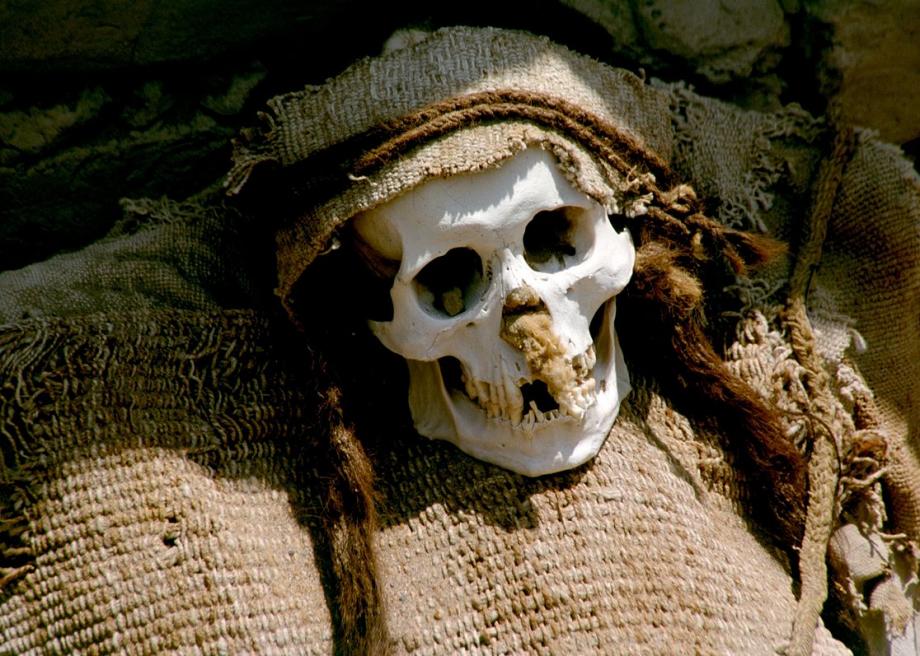
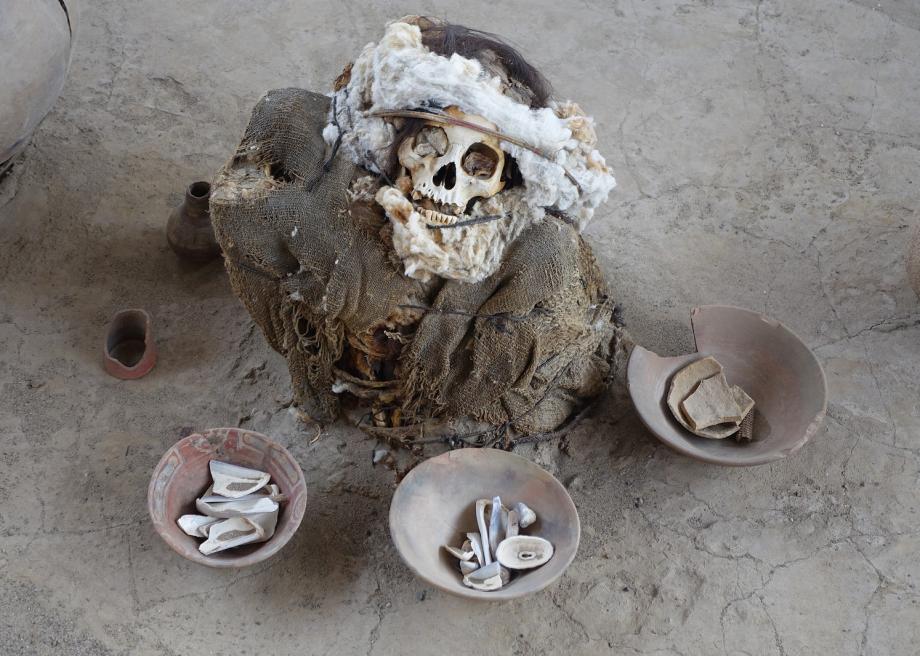
In the South of Peru lies Nazca famous for the Nazca Lines however, located 28 KM from the city lies the Chauchilla Cemetery an ancient burial site of the Nazca civilization that thrived in the area 200 BC to 600 AD.


This is located in the middle of the desert and was discovered in the 1920’s most likely by tomb robbers and for many years after has been a victim of countless robberies and acts of disrespect on the tombs that lied there undisturbed for years many of the stolen items included pottery, jewellery and many priceless artefacts.


What is important to know about this site is that most of the skeletons that remained untouched by the thieves can still be seen in their traditional burial poses and it gives an insight to their burial traditions; most of them are buried in family tombs and are facing the sky facing east.   Also due to the burial techniques especially the use of resin combined with the harsh arid desert some remains still have some skin and hair still hanging on.


It was not until 1997 that the Peruvian government decided to act and passed a law that would protect the site and now a small fee needs to be paid upon entry (around S/.8.00 to S/.10.00 soles)  however, although this act is good it is still apparent that action should have been taken many years before. Bones, bits of ceramics and materiel from the tombs can be seen scattered across the desert close to the site.

I promise to visit this place and write my own story to let you know how to get there and what to do, but I couldn't resit to mention about this amazing place. If you're in Nazca or near around Ica don't forget to visit it. 

Pictures from: Slate.com / PeruToptours / El Rincon de Sele

Paddington bear is back in Peru!


Hello my friends! This time I want to share some news with you than writing about history or some of my experiences here in Lima.
Well as you know I'm British so when I just found out that Paddington was here (I mean his statute) I was shocked! I mean, How didn't I know about this???? ahahaha lol well when I'm at work I don't really get to hear much about the outside world you know? 
Anyway... if you love Paddington stories like I did and if you're here in Lima go to visit it at Salazar Park in Miraflores (just near Larcomar mall) and you can get your picture :D with Paddington. 


"With the installation of this endearing character in Miraflores, we remember and celebrate the historical, cultural, educational and economic ties between the UK and Peru. Now that will be in Larcomar, one of the most tourist places of Lima a few meters from the headquarters of the British Embassy, ​​we expect the Paddington Bear becomes an attraction in itself."

This teddy effigy of Peruvian origin is one of several designs fifty statues that were part of the "Paddington route" (Paddington Trail) held in the British capital last year.

The unveiling was hold the past 17th of July and the ones in charge were the mayor of Miraflores, Jorge Muñoz Wells, and the Lord Mayor of the City of London, Alan Yarrow, who was on an official visit to Lima.

Adventure Trek to Lomas de Lachay


Lomas de Lachay is located just outside the Pan-American Highway (Carretera Panamericana) North Km. 105 and is a place that I would recommend to anyone.  Here is my adventure and some advice for anyone who reads this:

First of all Lomas de Lachay was made a national reservation on the 21st 1977 and this reserve is located in the region of Lima and the province of Huaura. It expands across an area of 52,070 hectares. The best season to visit the place is in winter, between July and November because the humid season is notable for its green hills and vegetation which creates more wildlife especially birds and insects. , this mostly due to the sea air currents that create humidity, 100 % in winter with frequent showers however, during the dry season humidity is less 79 % in summer and precipitation is very rare making this place baron and brown.


Carica candicans
 Here you will find 74 plant species registered, among them 25 are on their way to extinction. Among the most notable, you will find the Peruvian papaya (Carica candicans),  (Capparis prisca), (Caesalpinia tinctoria) and the nettle (Loasa urens), which cover the reserve with yellow attractive flowers. Also, you can observe numerous gramineous, tillandsias and succulents.


The common mammals found here are the rodents, but you can also find other species like the Sechuran Zorro(fox) (Pseudalopex sechurae), the Andean Skunk (Conepatus rex), the mountain mouse (Phyllotis spp.) and the vizcacha (Lagidium peruanum).
Throughout the reserve there exists approximately 55 bird species pertaining to 16 families, among them are: the Burrowing Owl (Athene cunicularia), the Andean Tinamou (Nothoprocta pentlandii), the American Krestrel (Falco sparverius peruvianus) and diverse species of hummingbirds.


Among the most notorious reptiles, you can observe the peruvian snake (Bothrops pictus) and the Curl Tail Lizard (Tropidurus sp.). There are also many arthropods.

You may get to this location through tour guides but be careful when I a booked a tour to this place the company was unreliable and cancelled the bus at the last moment. Just to let you know and don't get scammed byt them here is the name and link of the company:

HD Travel Peru, I got to know about then through the website OferTop (a website you can buy tickets for short trips and some other goods, I don't know about the web site but this company shouldn't be offering a service they won't complete, a company like this give you a bad  image of honest Peruvians) 

Ok, let's continue xD hehehe I got a bit emotional ... Now you can make your own way there and it is pretty straight forward and can be an adventure.


I would recommend that you travel to the street called Jr. Sandia and look for the company called “Empresa de Transportes San Martín de Porres” it is a small bus company that goes all the way to Huacho, there is only one bus fare from Lima either to Chancay or Huacho (S/.12.00 soles). Remember to ask the travel assistant on the bus to tell you when you reach km 105 because Huacho is past Lomas de Lachay, to get to this location from Lima is about 2 to 3 hours.

Part of the entrance...still not in the main place
When you get off the bus you will find yourself in the middle of the desert there are buses that are running to Lomas De Lachay and if you are lucky like I was you can hitchhike on one of these buses to the entrance if not you may find yourself walking for a good 1 to 2 hours to the entrance.  
The entrance is mark with a small cabin and you can see the Peruvian flag waving there, there will be a park warden there who will sell you the tickets, the price for entrance is S/.10.00 soles per a person and it is cheaper for children (S/.3.00 soles) and elderly people (free ticket).

My 5 tickets for me and the family, also they provide you  a brochure with info about the place
OK so now you have your ticket but guess what? This is not really where the trek begins if you don’t have transport you will have to walk for a further 40 minutes till you reach the visitors centre. In my opinion it is a much better option to walk, you get to see soo much more and can take a lot more pictures to.


Remember to vigilant when walking as there are many vehicles that pass, just move to the side and let them pass and you shall be fine.


When you reach the visitors centre another park warden will be there and he or she will inform you about the different routes there is. 

There are two main routes the “The Circuit of the Fox” this will take you approximately 20 mins to complete and then you have “The Circuit of the Piquial” which can take up to 2 hours to complete both connect so you can complete both in the same walk if you wish.


 The routes are lined with signs to guide you through but be careful over time people who have the tendencies to be lazy have carved short-cuts that sometimes can be a bad idea to follow as I found out.


The paths can be rough to walk on so bring good walking boots as there are holes, uneven ground and steep winding paths up the mountain side. As I mention one such shortcut I took, took me up a steep part of the mountain and it became soo steep and hard to climb I had to stabilize myself my climbing up on all fours, this was hard but I must admit it was fun.


When you reach the top of the mountain you can really appreciate the breath taking view of the landscape around you, the green valleys below and in the distant you can see the harsh desert sands and the sea.  The sun can be harsh here and if you are like me who roasts under the sun then bring a hat, sunglasses and sunscreen; I made the mistake of not doing this and paid a high price. I am now the colour of freshly cooked lobster hahaah. 


When looking down on the valleys you may see some structures, these structures are from the Pre-Columbian cultures. At the same time, you can appreciate the huge granite and diorite rocks which have worn away over time leaving concavities and soft contours.

This one reminds me of  Hancock and the heart logo Will Smith makes in the moon

Regarding animals and insects you may not find many depending on the season and due to the amount of people most of the animals go into hiding however, you may see a lot of snails and bird and oh if you dislike wasps then be warned this can be seen and heard flying around for most of the trek. (Pictures are at the beginning of this article) 
Finally you will start to climb back down but be careful as some paths as mentioned before can be difficult at the bottom you can buy yourself  something to eat at the café that is located there.


Again, if you are like me who did not bring transportation you will have to walk all the way back to the highway this is very tough especially if you are tired and then faced with a long walk under the sun but I truly enjoyed it and always love to face a good walk with good spirit

When you reach the highway there is neither an official bus stop nor a place to catch the bus so just take care when crossing the road and when you make it to the other side just wave down a bus that comes by and ask if they will take you to Lima, the cost once again is about 12 soles. Another important note to remember is that not all buses will stop especially buses from large well-known companies such as Cruz Del Sur, Exclusiva and Tepsa but buses like Z Bus and Barranca Tours are more likely to pull over for you. 


All in all this place is truly a wonderful site to visit and we all should do our best to look after it, if you see some litter on the way it would be a nice gesture to pick it up and place it in the bin that are on the route. If you travel here and find something new or a new route lets us know and once again sunglasses, sunscreen, a hat and good boots are essential. 

I really hope you've enjoyed reading my experience and now you are ready to live yours!

Tacna: Battle of Alliance Heights

Alliance Heights (Tacna)

Why the 28th of August is important to Peru:

The War of the Pacific was a brutal campaign and was fought by Chile, Peru and Bolivia in 1879 to 1883 and this war started over many issues but tensions spiraled out of control over sodium nitrate deposits, an important mineral that was important in trade, and a the Antofagasta region that was once part of Bolivia contained a large deposit of sodium nitrate. 
Now there was always some disagreement with the boarders between the countries that would eventually fight but another important element in this was tax especially between Bolivia and Chile on the mines that existed in the region. Tensions only increased in the region as in 1873 Peru and Bolivia signed a secret alliance and Chile was only informed by Argentina who got to know about this because Peru and Bolivia offered them to join this alliance however, they never joined. The amounting tensions eventually lead to the occupation of Antofagasta by Chilean forces in 1878 and this lead to diplomatic talks that failed completely between the countries, the secret alliance then would mean Peru would have to defend its ally Bolivia in the event of war, Chile advised Peru to remain neutral but Peru honoured the alliance and refused. 
At the early stages of the war it seemed the conditions were favourable to Peru and Bolivia and they won a string of victories however, due to many factors like politics and outside intervention especially with financial help (weapons and money was sent from Europe to Chile) Peru and Bolivia were eventually pushed back. The first major defeat was the Battle of Arica and Tacna in 1880 which also ended the involvement of Bolivia for the remainder of the war.


Peru continued to fight and refused surrender but resistance was often futile often poorly equipped soldiers and poorly maintained weapons were used against the highly trained and well equipped soldiers of Chile. Bolivia also encouraged Peru to fight even though the Bolivian army was now incapable of fighting at this point and the country was facing financial ruin.
The next major defeats for Peru were the loss of Chorrillos and Miraflores some of the last lines of defense and on January 17, 1881 the Chilean army entered Lima and occupied it. Fighting then took another turn as the fighting then moved into the highlands and became a guerrilla war. In June 1884 the Treaty of Ancón was officially signed and ended the war, the war claimed over 20,000 dead or wounded. 
In this treaty Peru lost Tarapacá to Chile but while Tacna and Arica was occupied by Chile in the treaty these two regions would be given a vote 10 years after the signing of the Treaty of Ancón this however failed due to the fact that neither country could agree on the terms on which the vote would take place until the intervention by the President of the USA Herbert Hoover who oversaw the Treaty of Lima which gave Arica to Chile and Tacna would be given back to Peru.


This was signed on June 3, 1929 over 45 years after the war had ended and Tacna was officially reinstated back to Peru on the 28th of August 1929. So every 28th of August there is a parade in Tacna and the flag of Peru is carried through the streets and to the main square. 
Tacna is seen as a heroic city this is because as many Peruvian would tell you, the fighting spirit they had and the love of their homeland meant they never surrendered to the will of the Chilean forces and always claimed to be Peruvian. 
Now with Bolivia, they lost all access to the sea and now as you can see on the map they are a landlocked country they still dispute the land-sea border to this day. 

You can now visit the Alto de la Alianza monument (Alliance Heights, Tacna) that marks the place of the crucial battle that took place there; there is also a graveyard that is close by where 600 anonymous Peruvian, Bolivian and Chilean soldiers were laid to rest.