El Peruanito, Sangucheria


On the 24th of June I went to the EL Peruanito  (Sandwich restaurant) with my friend Zac, this a restaurant located on Av. Angamos Este 391 – Miraflores ( not to far from ICPNA institute)


This restaurant was created 54 years ago by Mr. Luis Sánchez and his wife Rosario Aguilar.
Since it was open in Miraflores surrounded by foreigners and immigrants (Italians, Chinese, Americans) the owner decided to reaffirm his identity by calling his business: 
"EL PERUANITO" (The Peruvian)

Well, looking at the variety of the menu I eventually chose the Jamon de Pias with a cup of coffee which only cost me S/.13.00 soles. However, they also sell fruit juices and other sandwiches. 


You can also choose what to put on your sandwiches they give you options like lettuce, tomato, onions and a variety of different creams and sauces


The sandwiches here and really satisfying and at a good price and the service and atmosphere all help to make it a nice place to sit down and enjoy your breakfast.


Lucuma: Gold of the incas


In Peru you shall find a unique ray of fruits one of such interest is the Pouteria lucuma or Lucuma. This fruit has been known for many years and is also in displayed in some pottery by the Moche who was a civilization in Peru who thrived in 1th century AD but this fruit was not known to Europeans till 1531.
During the prehispanic, Lucuma was one of the principal ingredients of their diet along with corn, guayaba, quinua and kiwicha. On the arrival of the Europeans, it was cultivated in the Andean plateau and in southern of Ecuador . In Bolivia they cultivate it in La Paz , in Chile it is mainly grown in the  Region of Coquimbo and in Costa Rica around San Jose , where the migrants introduced in the early twentieth century.


Chocolate Cinnamon Torta with Lucuma Ice Cream and Toasted Corn Praline

Lucuma Mousse with a Passionfruit Reduction

 This fruit is green on the outside and orange on the inside now this fruit is rarely eaten by itself due to the texture and the dryness of the fruit. It is however made into a delicious juices, milkshakes and ice cream which are popular in Peru.


Benefits of Lucuma:
  1. High in carotene, which is an antioxidant that rejuvenates and reduces the effect of aging. It’s also great for eyesight.
  2. Sweet. It can provide a sweet, unique flavour to foods without causing the spike in blood sugar that most other sweet foods cause.
  3. High in iron, which increases energy levels through improving the transportation of oxygen to cells.
  4. High in Niacin (Vitamin B3) which is generally found in meat, making Lucuma a great source of Niacin for vegetarians and vegans.
  5. High in fibre, therefore assisting the digestive processes.
  6. Anti-inflammatory – The State University of New Jersey reported a study that evaluated the anti-inflammatory effect of Lucuma extract on wound healing and skin aging. The study found that Lucuma significantly increased wound closure and promoted tissue regeneration. The report went on to conclude that Lucuma may have anti-inflammatory, anti-aging and skin-repair effects on human skin. Using Lucuma in place of sugar means you reduce your chance of suffering from all the health problems that sugar contributes towards
Taken from: Davinahearne.com

I must admit I never heard of Lucuma in England, but when I first tried I instantly fall in love with the flavour, so if you come to Perú you can't miss this delicious fruit. I would recommend you to try it as ice cream, specially in summer!!

Wonders in the East of Lima


Tourism in the East of Lima is something that you may not hear about all too often and some places are not even explored by many people so here is some places that I think everyone who is looking for some amazing places outside of Miraflores can go to visit:


Marcahuasi is located in Huarochirí, Lima and is a plateau in the Andes Mountains located 4000 meters above sea level which was first investigated by Daniel Ruzo (1900-1991) in the 1950´s. What is unique about this place is the large diorite rocks that appear in humanoid or animal shapes. The most notable ones are “Monument to Humanity" or "Inca Face (Pecca Gasha)" a gigantic mass of granite, from different angles can clearly see several human profiles. Then there are the goddess Thueris, the Anfichelidia, the valley of seals, the African lion, the vicuña and the Toad. 


What origin of these “sculptures” are debated by many people for example scientists believe that they were created through a natural process through erosion and ancient glaciers that once may have been present in that area but others believe that they may have been sculptured by an ancient civilization (The Masma Culture).  The work of Mr. Ruzo is hotly debated and one that I would suggest you have look at; in my opinion it is very interesting.   
When visiting this place many suggest you bring all the supplies you need due to the fact that this place is kind of isolated and getting supplies there would be difficult. 
For more information on how to get there and tourist information visit http://www.marcahuasi.com/index.php this site also offers an English version.


Also located in Huarochirí, Lima is Cañón de Autisha now this amazing place is 170 meters below the ground. 


So if you like to go caving and hiking this is the perfect spot to do it. To explore this place there is a fee of 5 soles for each person before entry. There are many tour agencies that will take you there on a tour or if you are feeling brave you could travel with friend but remember to always be careful. 

Also in the East of Lima you will find a district called Ate a district that is kind of hectic and industrial however here lies some historical gems these include: Monticulos de Huaycán, Huaycán de Pariachi, Quebrada Seca, Gloria Grande and San Juan de Pariachi.
Information on these places can be difficult to find but you may find brief information and the location of these places on the Municipality of Ate. 

The most well know places of Ate when concerning historical and tourist places are places like:


Pictures taken by Lizardo Tavera
Cajamarquilla which lies on the boarder of the San Juan Lurigancho district of Lima. This place is believed to have been occupied by the Wari people around 500 AD who built on an early remains of past settlements. Cajamarquilla had an estimated population of 15,000 and most of the structures that were built here were made of adobe which all formed into a major commercial, administrative and military city. The downfall of this city and the civilizations that occupied it have been associated with climate change and natural disasters especially due to the changes of El Niño. This place is supposed to be protected and is recognized by the Instituto Nacional de Cultura but due to the overpopulation of the area illegal settlements have been built around it and a lot of this historical gem has been destroyed and damaged due to this also due to littering and illegal dumping of waste. 


Another site of interest that lies in Ate is Puruchuco, what can be found here is the remains of a palace and a cemetery. Here archaeologist unearthed over 2200 Inca mummies all buried in the traditional fetal pose and buried along with precious objects like ceramics and food. One amazing findings in this place was the finding of the “Cotton King” "El Rey del Algodón" a body found wrapped up in cotton and who wearing a feather hat, interesting the name Puruchuco is a Quechuan word meaning “feather hat”.


During excavations of this site there was numerous skeletal remains not found in the traditional fetal pose and what may found here is the remains of the Inca people who took part in the Great Inca Rebellion on Lima in 1535. Most of the skeletons were found badly damaged due to the weaponry that the Spaniards carried with them also some had gunshot damage. This really highlighted the violence that these people faced under Spanish conquest.  The Incas ultimately failed to defeat the Spanish and the bodies that were left behind were buried quickly and unceremoniously. 
This site is also another victim of the unyielding population explosion in Lima with vandalism and illegally settlements causing irreparable damaged to the site.
This place is relatively easy to get as it is in a busy part of Ate and most buses will pass by there and there is only a small fee to enter.  

Museum of the Inquisition


January 9, 1570 the Peruvian Inquisition began this like the Spanish Inquisition was an institution run by the church which sought to remove all those were guilty or supposedly guilty of crimes against the Catholic Church like heresy, witchcraft and sorcery. The main targets were people of lower class such as mestizos, women, Jews and people of African descent. 


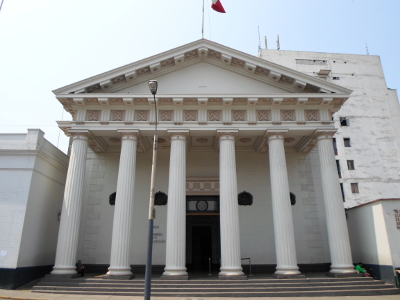
The history of these dark times in Lima can be seen in the museum located just off Abancay Avenue and is called Museo del Congreso y de la Inquisición (Museum of Congress and Inquisition). This building was the seat of the Peruvian Inquisition from 1584 to 1810, the Peruvian Inquisition came to an end in 1813 by virtue of a Cortes decree however it came back to a lesser degree in 1815 till its final demise shortly after. 
The role of this building changed many times before it opened its doors to the public as museum on the 26th of July 1968.  This museum is open from Monday to Sunday 9 am till 5 pm and there is a free guided tour. So what will you expect to find here?


Well as soon as you enter the museum you will be taken into the “Hearing Room” here prisoners were sentenced and after this building changed roles it became a seat of national meetings. One of the most iconic pieces of this room in is the ceiling which is all hand crafted from 30 000 pieces of mahogany. Now as you travel through the different rooms you will see a sudden changes that change I mean from the bureaucratic setting to the grim. 


You will be taken through rooms that display numerous original contraptions that were used to the extract confessions from the prisoners that were sent there.  Now it is said that torture was not as brutal as it is played out to be, in many cases a doctor was present, no blood was allowed to be spilt and each session was limited to 15 minutes. 


Now a warning for tall people like myself I found myself crouching through the area of the old dungeons so be careful with your head, this place displays two kinds of dungeons ones that are open and were for prisoners that were “fairly” judged and there are the secret ones that you can still see today these were for prisoners who really did not know why they were imprisoned, some of these prisoners were held for weeks, month and even years.
Another strange and usual piece of this museum is the pre-Hispanic aqueduct that was discovered and is located in a small room.


This museum is not all about the grim history of torture but within the same museum is the history of congress. Here you will be taken on a tour which will explain how the political scene of Peru changed through the years to the present moment.  


I would recommend this museum to anyone it is free and it is well worth the time and you can take all the pictures you wish here. 

Hidden gems of Peru

Peru has many sites that you can visit like Machu Picchu, Cusco and Lima however, there are many hidden gems within a county and I wish to give you some insights of these places below.


If you travel to Amazonas in Peru, you cannot miss Kuelap the ancient ruins of a fortress that once inhabited by the Chachapoyas (7th or 8th century) an Andean culture going back before the Incas however, they would be conquered and ruled by the Incas and by the 18th century they would be completely devastated.
The Kuelap is situated 3000 metres above sea level and in some parts of this ancient fort the walls can reach 19 metres high and beyond these limestone walls lies the inner city that contains around 400 stone structures most of which are now destroyed and only the bases of the contracts can be seen.


The purpose of this structure is still being asked and some suggest it was to protect from hostile outsider, a place of refuge or a place of aristocracy.
Kuelap was brought to the world’s attention in 1843 by Juan Crisosotomo Nieto, this place like Machu Picchu was already know to the indigenous people of the area.
To get to this place it is best that you travel to the town Chachapoya and from there Kuelap is 3 hours away by road additionally this place can be reached from Chiclayo however, this is an 11-hour road trip along bumpy roads.


Another place that is not well known or exploited by tourists is the Pre-Incan ruins of Marcahuamachuco which is locate in the La Libertad region of Peru. Built in 400 AD to 1000 AD no one really knows what civilization built this and it is said it had a profound influence on the Huari and Inca cultures especially in architecture.  The function of the site, although not fully clear, was as a religious and political center, including turning into a burial site in its later stages. 


This place is full of distinctive double-walled circular structures and large stone structures.
Due to the deterioration of this place the Global Heritage Fund with the aim of restoration, preservation, and sustainable tourism.
You can get to this place you first need to go to Trujillo and from there you can take a taxi or a bus that will travel three and half hours to the location.


Now, everyone may have seen Machu Picchu or plan to go to it however, there is an another place
that is similar known as Choquequirao located around the Willkapampa mountain range in the La Convención Province of the Cusco Region above the valley of river Apurímac. This is also an Incan site and is located 3,000 m above sea level. This place is also significant because it was the last refuge of Manco Inca Yupanqui when his siege on Cusco failed in 1535.
Like Machu Picchu this place contains many stone buildings and terraces but due to the remoteness of this place it is largely forgotten about.
The site was probably first visited by Juan Arias Díaz in 1710 but the first written reference to the site was made by Cosme Bueno in 1768 but was largely ignored.  In 1834 Eugene de Santiges rediscovered the site. In 1837 Leonce Agrand mapped the site for the first time, but his maps were forgotten. 


When Hiram Bingham, the discoverer of Machu Picchu, visited Choquequirao in 1909 the site gained more attention. It was in the 1970´s when excavation of the site began.
Treks to Choquequirao start from the village of Cachora, which is a 4-5 hour drive west of Cusco city. The route usually goes from Cachora through the Apuramic Valley to Chiquisca where most trekkers overnight. From Chiquisca the trail continues along the Apurimac River before ascending to Santa Rosa and then onto Marampata. 


Choquequirao is a little way on from Marampata. The trail to Choquequirao is unpermitted and can be completed unsupported, however most trekkers join organised tours that include a guide, camping equipment, mules and muleteers to carry gear and a cook to prepare food. From Choquequirao it is possible to continue hiking to Machu Picchu. Choquequirao trek itineraries to Machu Picchu vary. Most treks range from 7-day to 11-day hikes, and involve going over the Yanama Pass, which at 4,668m is the highest point on the trek. You will need to be well acclimatized for this trek to avoid altitude sickness.
It was revealed that the regional government is planning to invest $50m but is yet to be finalized.


Definitely there are much more sites to visit than the ones you already know :)